

Scent marketing for real estate developers can help customers not only see a development, but also feel it and remember it.
A customer walks into a sales office.
What do they see?
A scale model of the development.
Architectural renderings.
Material samples.
A price list.
They have already seen exactly the same things at three other developers’ sales offices.
So the real question is different.
What will make them remember your development?
What will make them go home and tell their partner, “I genuinely felt good there”?
The answer may be scent marketing.
I use this term throughout the article because it is the most common name for the intentional use of fragrance in marketing.
However, this does not mean placing a random air freshener in the corner of the sales office.
It means deliberately designing a fragrance that matches the development’s brand, architecture, and target customer.
What Is Scent Marketing for Real Estate Developers?
Scent marketing is the use of fragrance to create specific associations with a place, product, or brand.
For a real estate developer, the product is not limited to the home itself.
The customer experience is also part of the product.
It is how the customer feels during a visit to the sales office.
It is the atmosphere inside the model home.
It is the first impression they get when they enter the lobby.
It is the emotion they experience while exploring the development.
Fragrance therefore becomes part of sensory marketing and the broader customer experience.
It will not replace a good location.
It will not fix poorly designed floor plans.
It will not compensate for weak customer service.
However, it can strengthen everything that already works.
Research on ambient scent suggests that a pleasant fragrance can influence how people evaluate a space, perceive a brand, and remember lesser known brands.
This can be especially important for new residential developments.
The development’s name usually has no history yet.
The customer may be seeing it for the first time.
A well designed fragrance can become one of the elements that helps build that story.
Why Traditional Real Estate Marketing Is No Longer Enough?
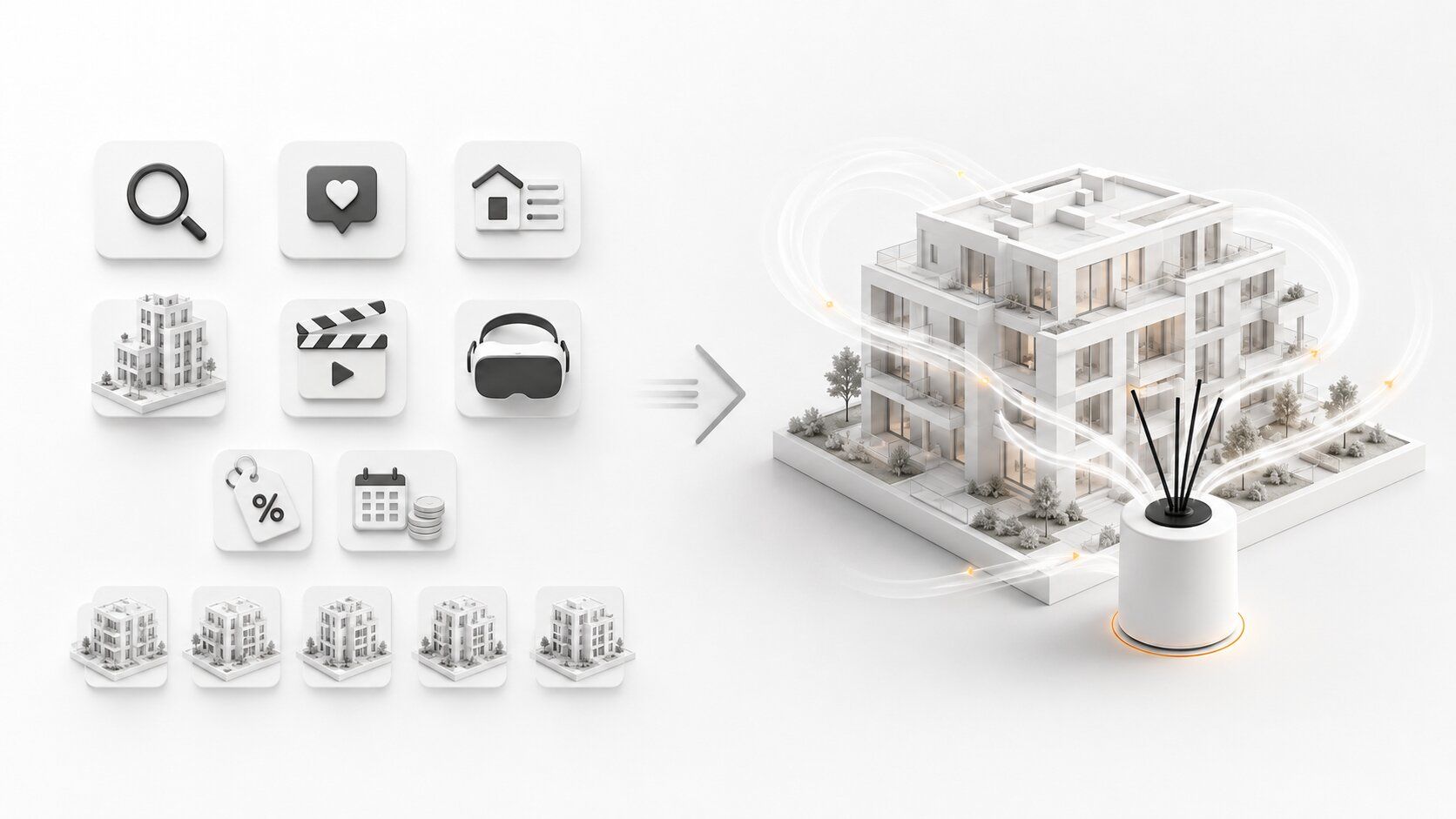
Most developers compete for attention using the same tools.
• Google Ads campaigns.
• Facebook and Instagram advertising.
• Real estate listing portals.
• Architectural renderings.
• Promotional videos.
• Virtual tours.
• Discounts and payment plans.
These tools are necessary.
The problem begins when every development communicates in the same way.
Modern architecture.
A great location.
Premium finishes.
Close to nature.
The perfect place to live.
Customers stop noticing the differences.
Every new offer begins to look like a copy of the previous one.
Scent marketing adds a layer that competitors often overlook.
You are no longer selling only square footage.
You are selling a feeling connected to the customer’s future life in that place.
How Does Fragrance Affect a Homebuyer?
Buying a home is a financial decision.
At the same time, it is also a deeply emotional one.
Customers compare prices, square footage, and maintenance costs.
However, they are also asking themselves other questions.
Will I feel comfortable here?
Can I picture family breakfasts here?
Does this neighborhood fit my lifestyle?
Does this place feel safe?
Will I be proud to invite friends over?
Fragrance can help support the answers to these questions.
It can communicate freshness.
It can create associations with nature.
It can suggest elegance.
It can create a calm atmosphere.
It can also have the opposite effect.
A fragrance that is too strong or poorly matched to the space can create suspicion and reduce trust in the brand.
Scent marketing is therefore not about making a fragrance powerful.
It is about making it appropriate.
Scent Marketing in a Real Estate Sales Office
A sales office is where an online lead becomes a real person.
Until this point, the customer has only seen advertisements, floor plans, and prices.
Now they begin evaluating the company itself.
They notice whether the office is organized.
They listen to the sales advisor.
They touch material samples.
They evaluate the quality of the finishes.
They feel the atmosphere.
The fragrance should remain in the background.
The customer does not need to walk in and say, “It smells amazing in here.”
It is better when they simply think, “This place feels pleasant.”
That is an important difference.
A good fragrance does not compete for attention.
It creates the right context for the sales conversation.
Consider a simple example.
You are selling a quiet residential community near a park.
Your marketing highlights greenery, walking paths, and a family friendly environment.
Inside the sales office, you introduce a subtle fragrance inspired by wood, fresh leaves, or green tea.
The renderings communicate one message.
The materials communicate the same message.
The fragrance communicates it too.
The brand becomes consistent.
Research suggests that the compatibility between a fragrance, the environment, and other sensory cues can influence how a space is perceived.
Scent Marketing in a Model Home
A model home should help the customer see their future.
Not an empty unit.
Not unfinished concrete walls.
Not wires hanging from the ceiling.
Their future.
A couch.
A table.
Light.
Books.
Coffee.
An evening with the family.
The fragrance inside a model home should support the feeling of everyday life.
It should not smell like a perfume store.
It should also never feel like an attempt to hide moisture, construction materials, or poor ventilation.
First, remove the source of the unpleasant odor.
Only then should you introduce a fragrance.
The same principle applies to the interior itself.
Fragrance will not fix a messy space.
One study found that a pleasant scent in a disorganized environment can reduce the perceived value of products because customers notice a conflict between the fragrance and the reality around them.
Start with the fundamentals.
• Cleanliness.
• Temperature.
• Lighting.
• Quiet.
• Ventilation.
• Organization.
• Quality of the finishes.
Only then should you add fragrance.
Scent Marketing in a Development’s Common Areas
Fragrance can also be used after the sales process has ended.
The lobby, reception area, resident lounge, and shared amenities are all part of the development’s brand.
This is especially relevant for premium developments, investment properties, and homes intended for the rental market.
A customer purchasing a more expensive property expects a consistent experience.
Not only in the advertising.
Also after entering the building.
Fragrance can become part of the development’s identity, just like its colors, logo, typography, and finishing materials.
This is known as sensory branding.
However, it must be approached carefully.
Residents use these spaces every day.
Something that feels pleasant during a 30 minute presentation may become overwhelming with constant exposure.
The fragrance system should therefore allow the intensity and operating schedule to be adjusted.
What Fragrance Is Right for a Residential Development?
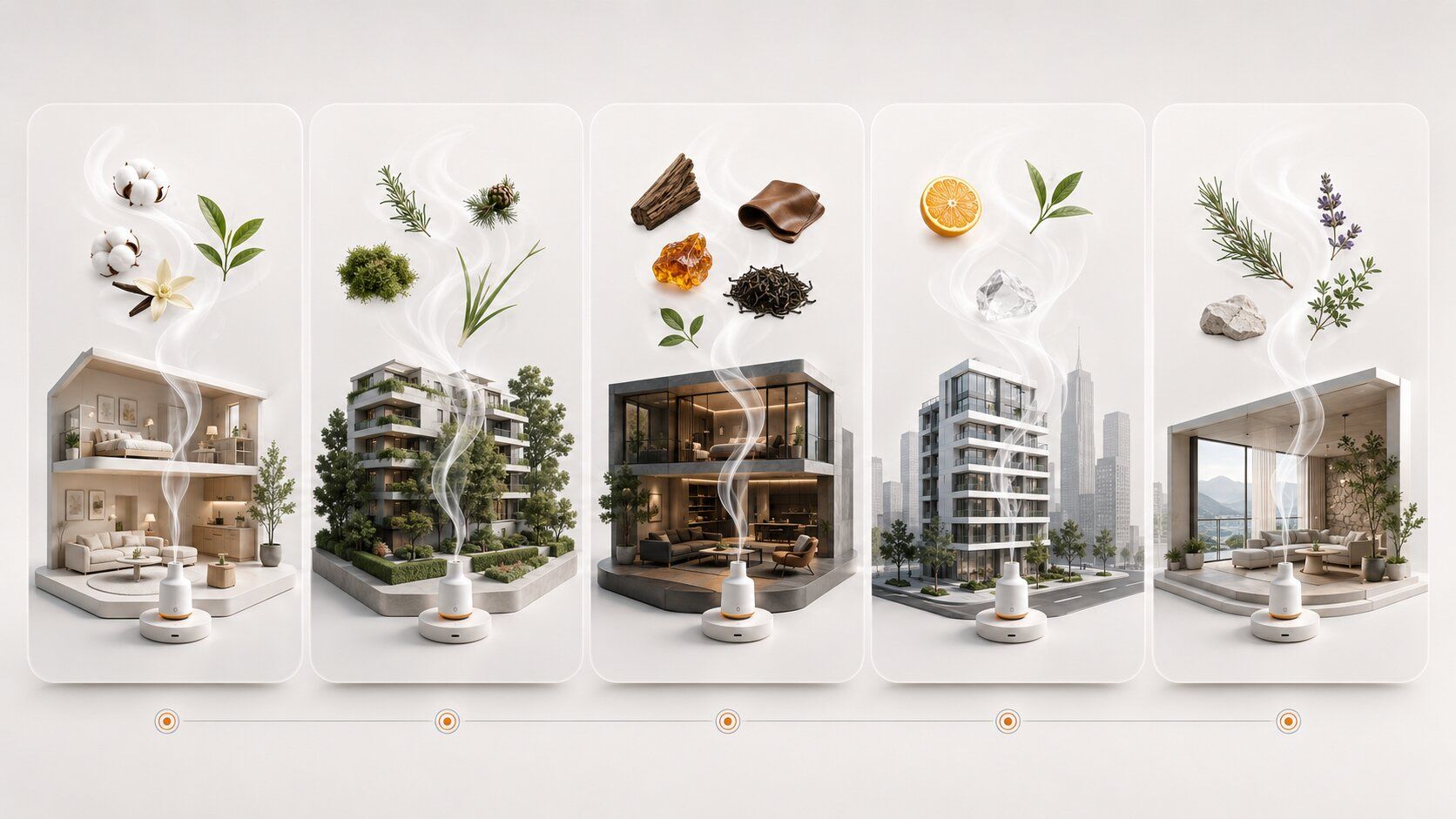
There is no single fragrance that will sell every home.
The fragrance must match the development’s market positioning.
A Family Oriented Development
Subtle compositions associated with cleanliness, calm, and home life may work well.
Possible notes include cotton, light wood, a small amount of vanilla, or green tea.
The goal is not to make the space smell like a candle store.
The goal is to create a sense of comfort.
A Development Close to Nature
Fresh, green, and woody compositions may be a good choice.
These can include notes of moss, grass, forest, cedar, or herbs.
The fragrance should match the development’s renderings and overall communication.
Premium Residences
Calm, deep, and restrained fragrances often work better in premium developments.
Possible notes include wood, leather, amber, tea, or subtle oriental accents.
The key word is subtlety.
Luxury rarely needs to shout.
An Urban Development
A modern urban development may benefit from clean, light, and energetic compositions.
Citrus, white tea, or fresh mineral notes can reinforce a sense of modernity.
Vacation Properties
For coastal or mountain developments, the fragrance can reference the location.
However, the connection should not be too literal.
An artificial ocean breeze fragrance can quickly become tiring.
A subtle composition inspired by the location’s natural environment will usually work better.
How to Implement Scent Marketing for Real Estate Developers?
The worst possible plan looks like this.
Buy a diffuser.
Choose a fragrance the CEO personally likes.
Set it to maximum intensity.
Wait for sales to increase.
That is not a strategy.
It is an uncontrolled experiment.
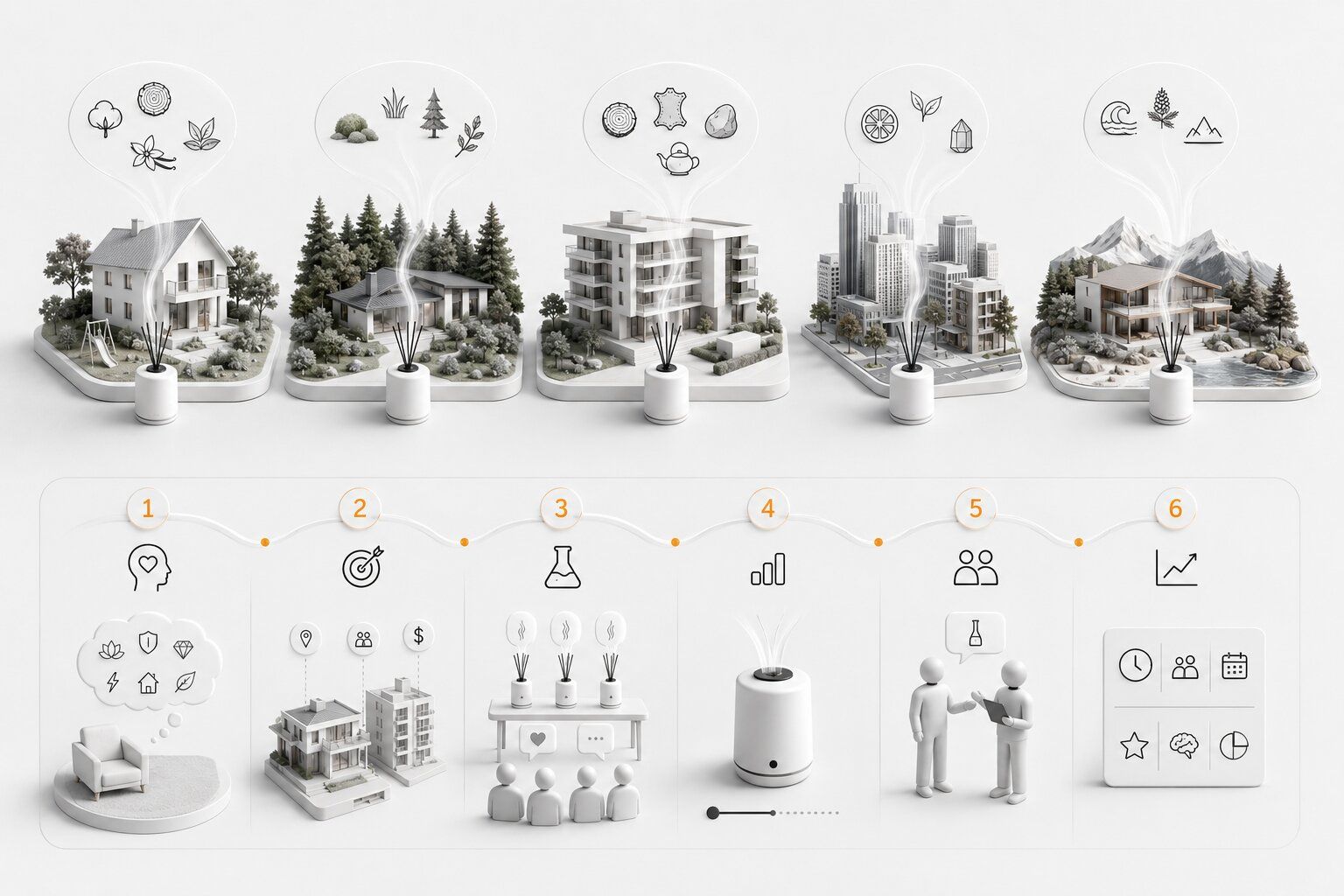
A better process looks like this.
1. Define the Emotion
Start by answering one question.
How should the customer feel?
Calm?
Safe?
Prestigious?
Energized?
At home?
Connected to nature?
Choose one primary emotion.
Do not try to communicate everything at once.
2. Review the Development’s Positioning
The fragrance must match the price point, architecture, location, and target audience.
A small family community should smell different from a luxury apartment building in a downtown area.
A vacation property should feel different again.
3. Prepare Several Options
Do not select the first fragrance in a catalog.
Test at least three compositions.
Present them to employees.
Present them to customers.
Collect reactions without suggesting the answer.
Do not ask, “Does this fragrance smell luxurious?”
Ask, “What does this fragrance remind you of?”
The answers will be more honest.
4. Start With Low Intensity
The customer should notice the fragrance only after spending a moment in the space.
When they can smell it before entering the office, it is probably too strong.
Intensity matters, and research results vary depending on the type of space, the context, and the way the fragrance is used.
5. Train the Sales Team
Sales advisors should understand why the fragrance is being used.
They should also know how to respond when a customer reports discomfort.
The best response is not, “No one has complained before.”
A better response is, “Of course. We can reduce the intensity or turn the system off.”
6. Measure the Results
Do not assume the fragrance is effective simply because the team likes it.
Compare the data.
• The amount of time customers spend in the sales office.
• The number of completed meetings.
• The number of follow up conversations.
• Customer ratings of the visit.
• Recall of the development’s name.
• The conversion rate from a meeting to a reservation.
However, do not attribute the entire sales result to one fragrance.
Customer decisions are influenced by price, available inventory, service quality, financing, location, and many other factors.
Scent marketing should support the sales process.
It should not be expected to replace it.
How to Combine Scent Marketing With Other Marketing Activities?
Consistency produces the strongest results.
Fragrance should be part of a broader system.
Connect it with areas such as real estate development branding, sales office design, model home staging, real estate developer website design, and residential development marketing.
These are also natural opportunities for internal links to other articles on your website.
Consider the following example.
The development’s brand is built around peace, quiet, and proximity to nature.
The website uses calm colors.
The photography shows peaceful mornings on the terrace.
The sales office is finished with natural wood.
The music is subtle.
The fragrance is inspired by a forest after rainfall.
The sales advisor does not begin the conversation by discussing a promotion.
They begin by asking about the customer’s lifestyle.
Every element tells the same story.
That is when marketing begins to work as a system.
The Most Common Scent Marketing Mistakes in Real Estate
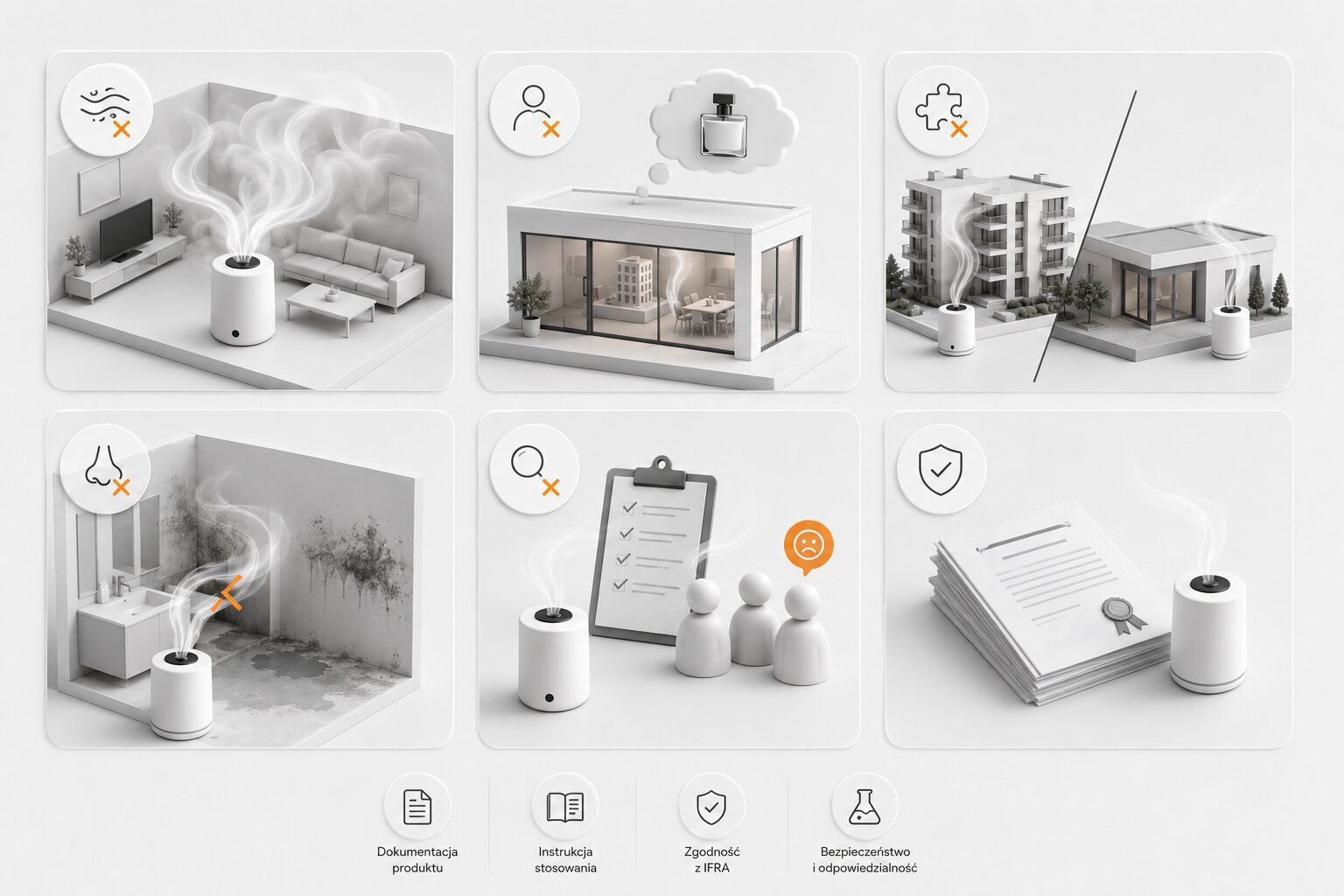
A Fragrance That Is Too Strong
More is not better.
When the fragrance dominates the space, the customer begins focusing on the fragrance itself.
Choosing Based on the Owner’s Personal Taste
The fact that the CEO likes heavy perfumes does not mean that this type of fragrance is right for a family oriented community.
The fragrance should be selected for the customer and the brand.
Not for yourself.
A Lack of Consistency With the Development
The fragrance of a luxury hotel may feel out of place in a simple sales office for an affordable development.
The customer may not be able to explain what is wrong.
However, they will still feel that something does not match.
Trying to Hide Problems
Fragrance should never be used to cover up moisture, paint, sewage odors, or a poorly ventilated interior.
Fix the problem first.
A Lack of Testing
The team can quickly become accustomed to the fragrance and gradually increase its intensity.
A customer experiencing it for the first time will perceive it very differently.
A Lack of Safety Standards
Ask the supplier for product documentation, usage instructions, and information about compliance with current IFRA Standards.
IFRA Standards restrict or prohibit the use of certain ingredients. However, they are industry standards and do not replace local regulations or a complete safety assessment.
Does Scent Marketing Actually Sell Homes?
There is no honest basis for promising a specific increase in home sales solely because a fragrance was introduced.
Research on ambient scent includes both positive findings and studies that found no measurable effect on sales.
Context matters.
The quality of the fragrance matters.
Its intensity matters.
Its compatibility with the space matters.
The behavior of the sales team also matters.
A thoughtful developer therefore does not ask, “Will fragrance sell our homes?”
They ask, “Will fragrance improve the customer experience and strengthen the positioning of our development?”
That is a much better question.
FAQ
What Is Scent Marketing for Real Estate Developers?
Scent marketing for real estate developers is the intentional use of fragrance in a sales office, model home, or the common areas of a residential development.
Its purpose is to create the right atmosphere, strengthen brand associations, and improve the customer experience.
Does Scent Marketing Increase Home Sales?
What Fragrance Should You Choose for a Sales Office?
Can a Fragrance Drive Customers Away?
Where Should Scent Marketing Be Used?
How Can You Measure the Effectiveness of Scent Marketing?
How Much Does Scent Marketing Cost for a Real Estate Developer?
Conclusion
Customers are not buying square footage alone.
They are buying a vision of their future life.
That is why you show them architectural renderings.
That is why you furnish a model home.
That is why you invest in branding, marketing materials, and the sales experience.
Fragrance can connect all these elements into one consistent experience.
However, it must be subtle.
It must match the brand.
It must be safe.
It must be tested.
Do not treat it like an air freshener.
Treat it as part of the strategy.
That is what effective scent marketing for real estate developers is all about.