

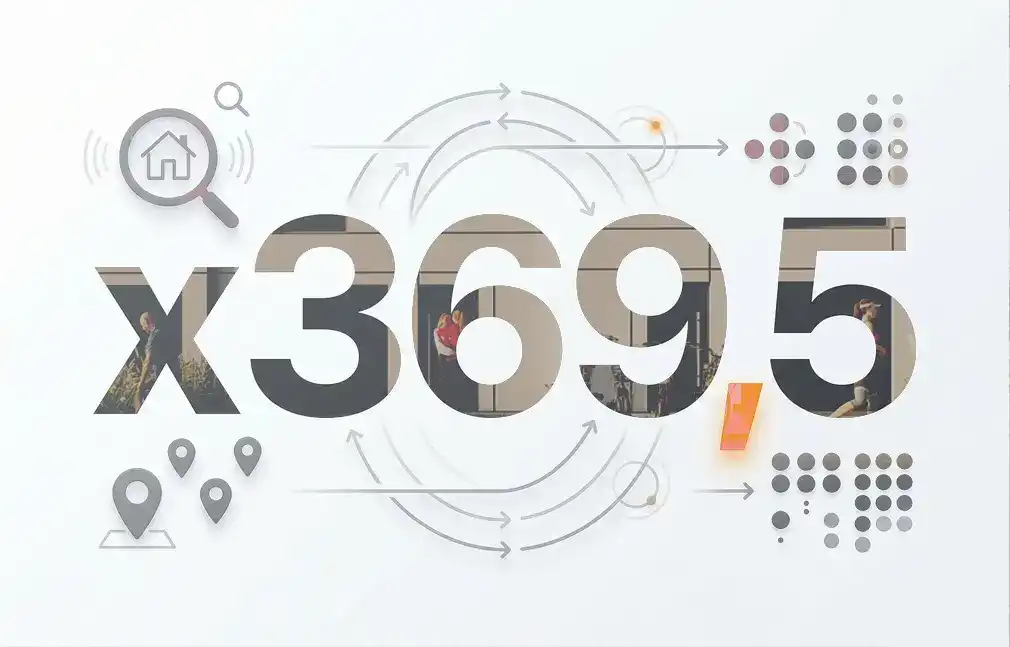
In March, we launched online advertising for Osiedle Głosków, a residential home development by BG Development II Sp. z o.o. in Poland, near Warsaw.
Because this project is located near Warsaw, the goal was never to generate empty website traffic.
The goal was much more important than that.
We wanted to reach people who were genuinely considering buying a home in this area, then move them toward inquiry, conversation, and ultimately, a sale.
After just one month, the campaign was already showing clear traction.
The website recorded 2,700 visits.
We generated 32 leads.
Most importantly, the campaign contributed to the sale of 1 home.
The March report also showed 57,905 ad impressions, 2,823 visits from ads, an average cost per click of about $0.20, and a total ad spend of approximately $562.50. Part of the planned budget was not spent because the payment card hit its limit.
Starting Point: First, We Needed to Create Real Traffic
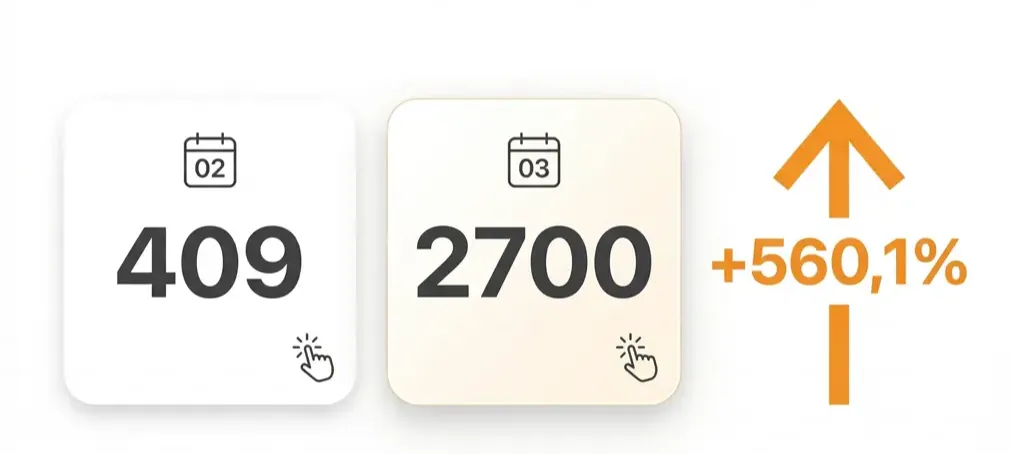
Before the campaign launched, the development website was receiving 409 monthly visits.
After going live in March, traffic increased to 2,700 visits.
That represents a traffic increase of roughly 560.1% in the very first month.
This matters because when you are selling homes, simply having a website is not enough.
Even a well designed website will not generate sales on its own if qualified buyers are not reaching it.
First, you need to create a steady flow of the right visitors.
Only then can you realistically talk about leads, sales conversations, and closed deals.
This Was Never About Clicks. It Was About Buyers
The purpose of this campaign was not to inflate vanity metrics.
We were not interested in impressions for the sake of impressions.
We were not trying to generate traffic just to say the numbers looked good.
Our job was to attract people who were seriously considering buying a home, then guide them through the next stages of the buying decision.
That is exactly why this campaign was built around business outcomes.
Not traffic for traffic’s sake.
Not random visits.
Only qualified leads and real sales.
Our Proprietary Hot Demand System
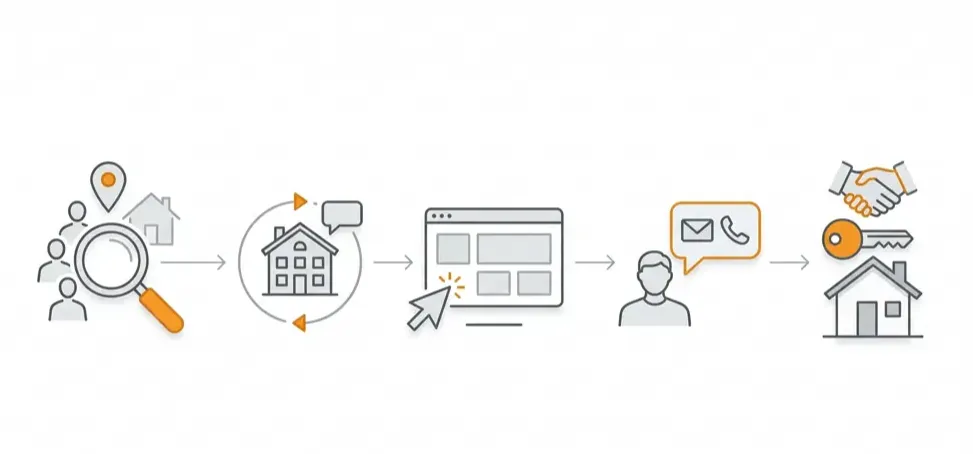
In this campaign, we used our proprietary Hot Demand System.
The idea behind it is simple.
First, we reach people who are already actively looking for real estate.
Then, we remind them about your development so they do not drift toward competing projects.
We have already tested this system across multiple developments, and we know it works.
It helps attract more qualified leads instead of wasting budget on people who were never likely to buy in the first place.
In practice, that means we are not trying to educate the entire market from scratch.
Instead, we capture existing demand and direct it toward a specific development.
Then we stay in front of the people who already showed interest but have not made a final decision yet.
That is the mechanism behind the results shown below.
What Happened in the First 30 Days
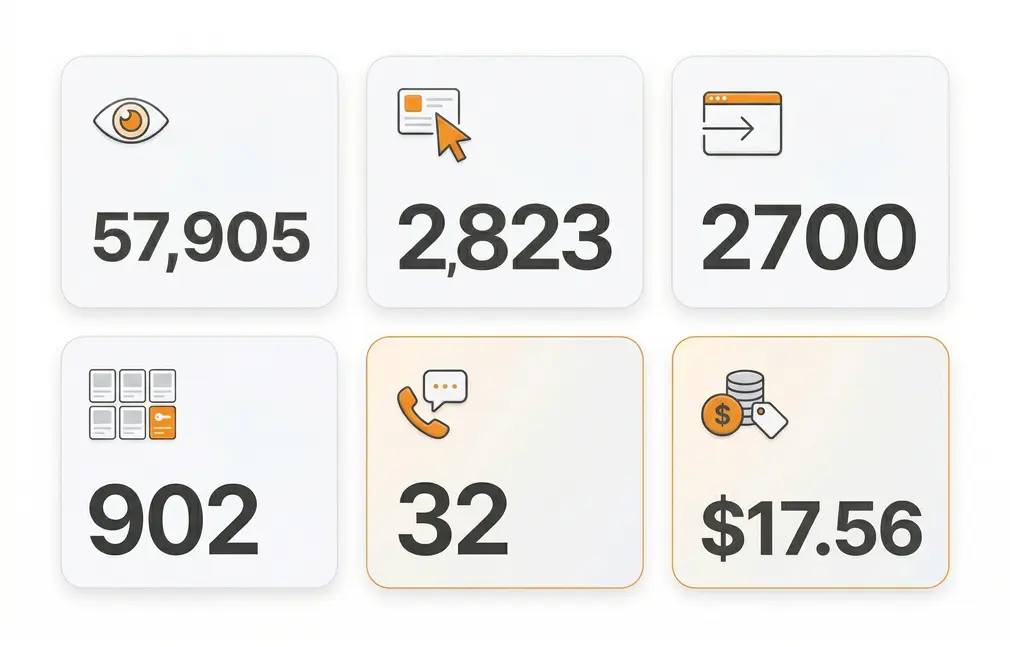
In March, the campaigns generated 57,905 ad impressions and 2,823 website visits from paid advertising.
The average cost per click came in at about $0.20, and the total ad spend was approximately $562.50.
The report also noted that part of the budget could not be used because of the payment card limit.
On the website itself, we recorded 2,700 visits, including 902 visits to individual home listing pages.
Users clicked the phone number 23 times and submitted 9 contact forms, which gave us a total of 32 leads.
That puts the average cost per lead at about $17.56.
1 Home Sold in the First Month
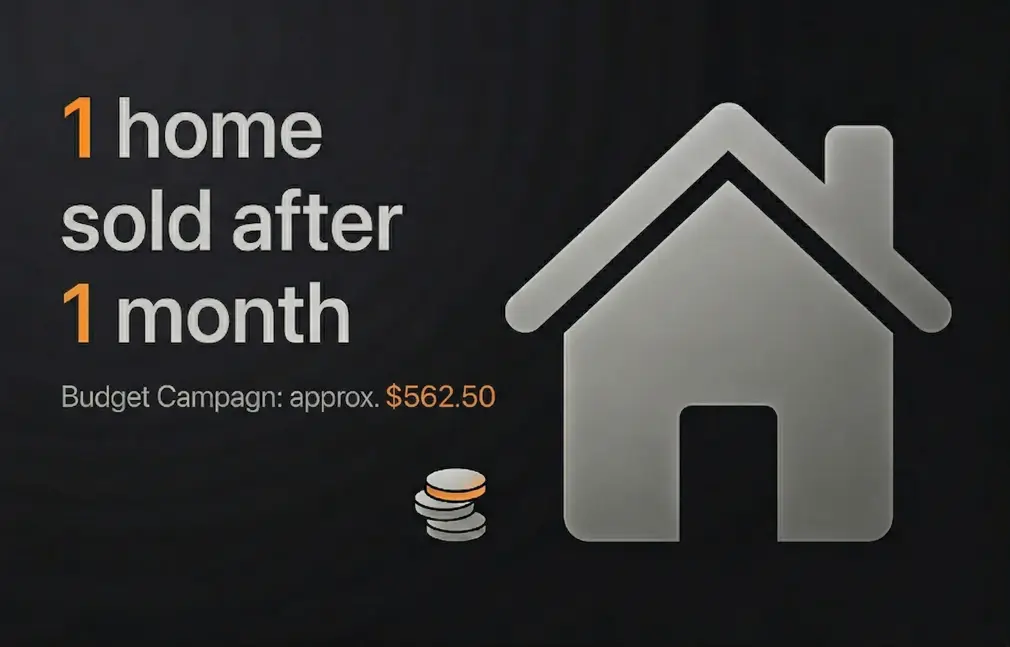
After the first month of campaign activity, with an ad spend of approximately $562.50, the campaign contributed to the sale of 1 home.
If we compare that with the 32 leads generated, we get a lead to sale conversion rate of roughly 3.1%, or simply 3%.
That is a strong signal.
Especially in real estate, where buying a home is not an impulse decision.
It is a longer process that usually involves comparison, conversations, and a high need for trust and confidence.
A Home Worth $184,750 Sold on an Ad Budget of Roughly $562.50
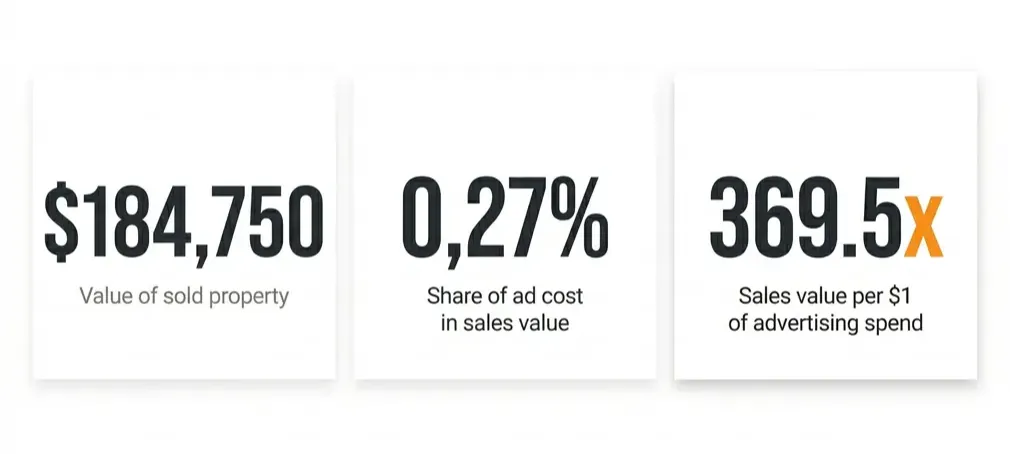
The strongest takeaway from the first month is simple.
A home valued at $184,750 sold while the total advertising budget was only about $562.50. That means the advertising cost represented only about 0.30% of the transaction value.
Put even more simply, the campaign delivered a 369x return relative to ad spend. In practical terms, that means every $1 invested in advertising was tied to about $369 in property value sold.
From a developer’s perspective, this is not just an interesting metric. It is a concrete business insight. It shows that well structured online marketing can represent only a tiny fraction of the transaction value while still having a real impact on sales.
Why This Result Is Even More Valuable Than It First Appears
There is another important layer of context here.
In this specific development, conversion is naturally slowed down by the stage of the project.
When homes are offered in presale, many buyers do not make a decision immediately.
A large portion of the market prefers to wait until the development is further along.
In many cases, buyers become much more ready to commit once the foundations are completed or visible construction progress is underway.
That means some of the traffic and some of the leads generated now are not only working toward current results.
They are also building future sales momentum.
The campaign is creating demand earlier than part of the market is ready to buy.
Because of that, the roughly 3% conversion rate after the first month should not be judged in isolation.
It is not a ceiling.
It is a sign that the campaign is already working, with room to improve further as the project progresses.
What Were Users Doing on the Website?
The report also revealed several strong signals about traffic quality.
The longest single visit lasted 2 hours and 20 minutes.
One user viewed 86 pages.
Another generated 131 clicks within the website.
In addition, 82% of users visited the site on a smartphone.
This matters for two reasons.
First, users were clearly engaging with the offer rather than bouncing after a few seconds.
Second, the project website must be designed primarily for mobile, because that is where most of the interaction is happening.
People Preferred Calling Over Filling Out Forms
One of the most interesting insights from the report was that nearly 72% of all leads came from phone number clicks.
That means users were much more likely to choose immediate contact over filling out a form.
For a real estate developer, that is extremely valuable.
It shows that for this type of project, the phone is one of the strongest buyer touchpoints.
In other words, the advertising and the website should not only collect form submissions.
They should also make immediate phone contact as easy as possible.
What Role Did Google Ads and Meta Ads Play?
In March, Google Ads generated 15,093 ad impressions, 1,622 website visits, and an average cost per click of about $0.21.
Meta Ads generated 12,147 ad impressions, 254 website visits, and an average cost per click of about $0.13.
Even after the first month, the pattern was clear.
Google Ads remained the primary sales channel because it attracted users with stronger buying intent.
Meta Ads played an important supporting role earlier in the funnel by building awareness around the development and helping re engage users later.
That combination fits perfectly with the Hot Demand System.
One channel captures people who are already looking.
The other helps bring them back at the right moment.
The Problem Was Not Quality. The Problem Was Scale
The report also showed that the issue was not campaign quality.
It was campaign scale.
Impression share and click share remained below 10%, which means competitors were still capturing a large portion of the demand in the market.
The conclusion from the report was very clear:
We were not losing in Google because of quality.
We were losing because of scale.
That matters because it tells us the campaign is already capable of producing results.
With a larger budget, it could capture a greater share of demand and turn that into more qualified leads and more sales.
What Happens Next?
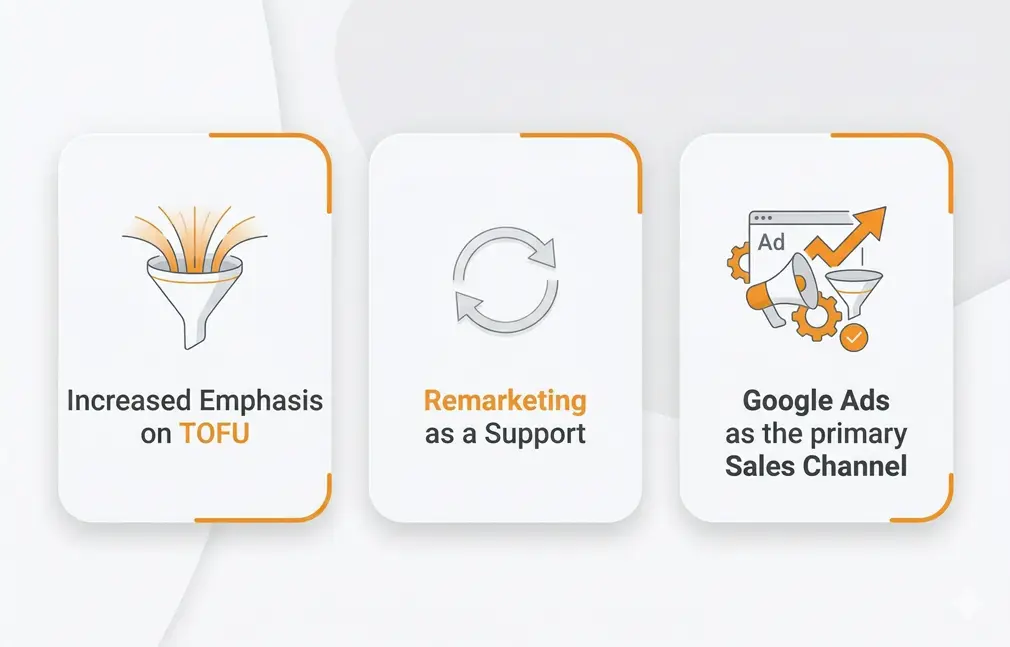
After reviewing March performance, the direction for the next month was clear.
In Meta Ads, the strategy was to place more emphasis on top of funnel activity.
Remarketing would remain in place as a smaller portion of the budget.
New creative variations would also be tested.
Google Ads would remain the primary sales channel.
At the same time, the Google daily budget was increased to approximately $22 per day.
That is the logical next step.
The campaign has already shown that it can generate qualified traffic and valuable leads.
Now the next stage is to scale that performance and keep capitalizing on demand as interest naturally grows along with construction progress.
Summary
After the first month of advertising for Osiedle Głosków by BG Development II Sp. z o.o., the campaign generated 2,700 website visits, 32 leads, and contributed to the sale of 1 home.
The advertising budget came to approximately $562.50, although full delivery was limited by the payment card cap.
The key takeaway is simple. A home valued at $184,750 was sold while the advertising spend represented only about 0.30% of the transaction value. Based on the reported result, the campaign delivered a 369x return relative to ad spend.
That shows how well structured online marketing can directly support residential real estate sales, even when the market is cautious and part of the buyer pool is still waiting for the project to reach later construction stages.
This is only the first month. This case study will be updated with future results.


