Do real estate developers really need housing development visualizations to sell faster and at higher prices? Yes.
And not just any visualizations.
In the age of the internet and social media, people buy with their eyes. If your development doesn’t look good in visualizations, even the best location and competitive pricing may not be enough.
Why? Because buyers want to see what their future home will look like. If they don’t see it, they’ll go to a competitor who shows them exactly that.
Why does the quality of housing development visualizations matter?
Because poor-quality visualizations kill sales.
Low quality = no emotional connection
Lack of details = no engagement
Artificial lighting and poor colors = lack of realism
A well-executed visualization doesn’t just showcase a building—it sells a lifestyle.
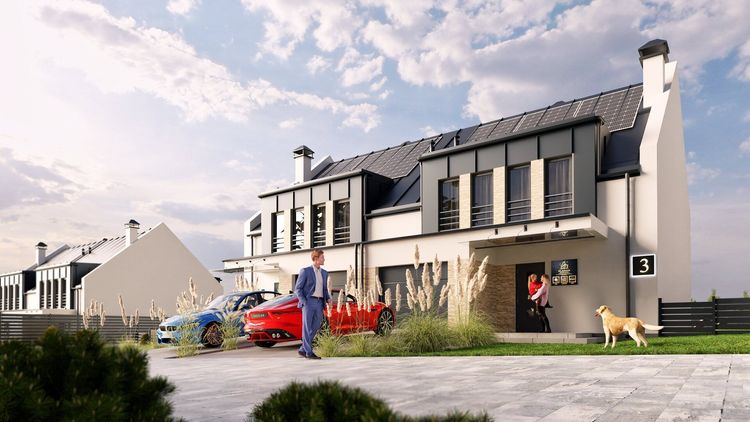
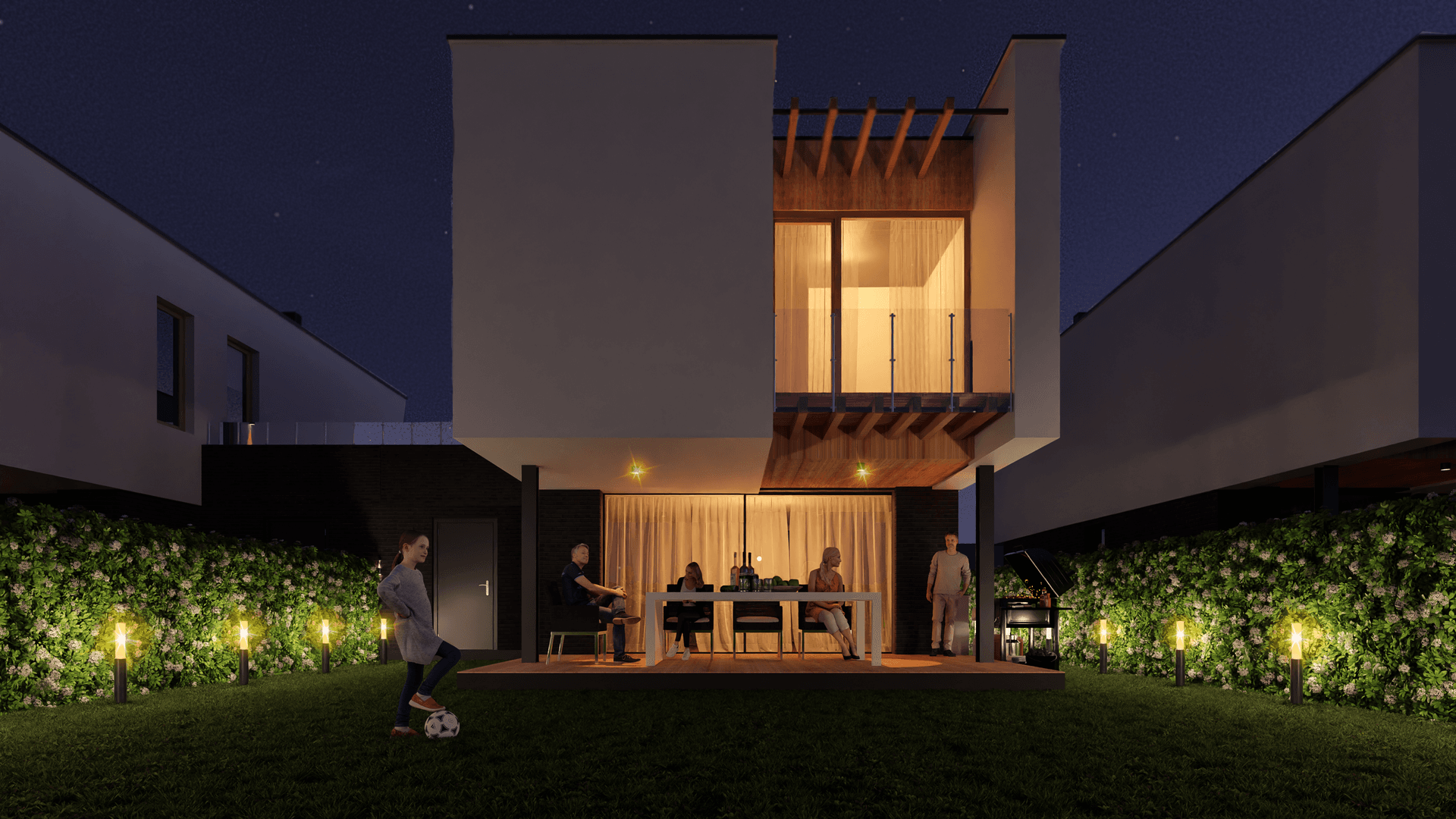
With the right visualization, buyers don’t just see the development—they feel what it’s like to live there. They see children playing in the playground, neighbors walking along pathways, the sunset reflecting off the building’s facade.
And they start imagining it as their future home.
That’s when the purchase decision happens much faster.
See housing estate visualization projects
See how similar solutions looked in real REND.PRO projects.
Not all visualizations work. They need to evoke emotions.
Here are the key elements:
1. Realism
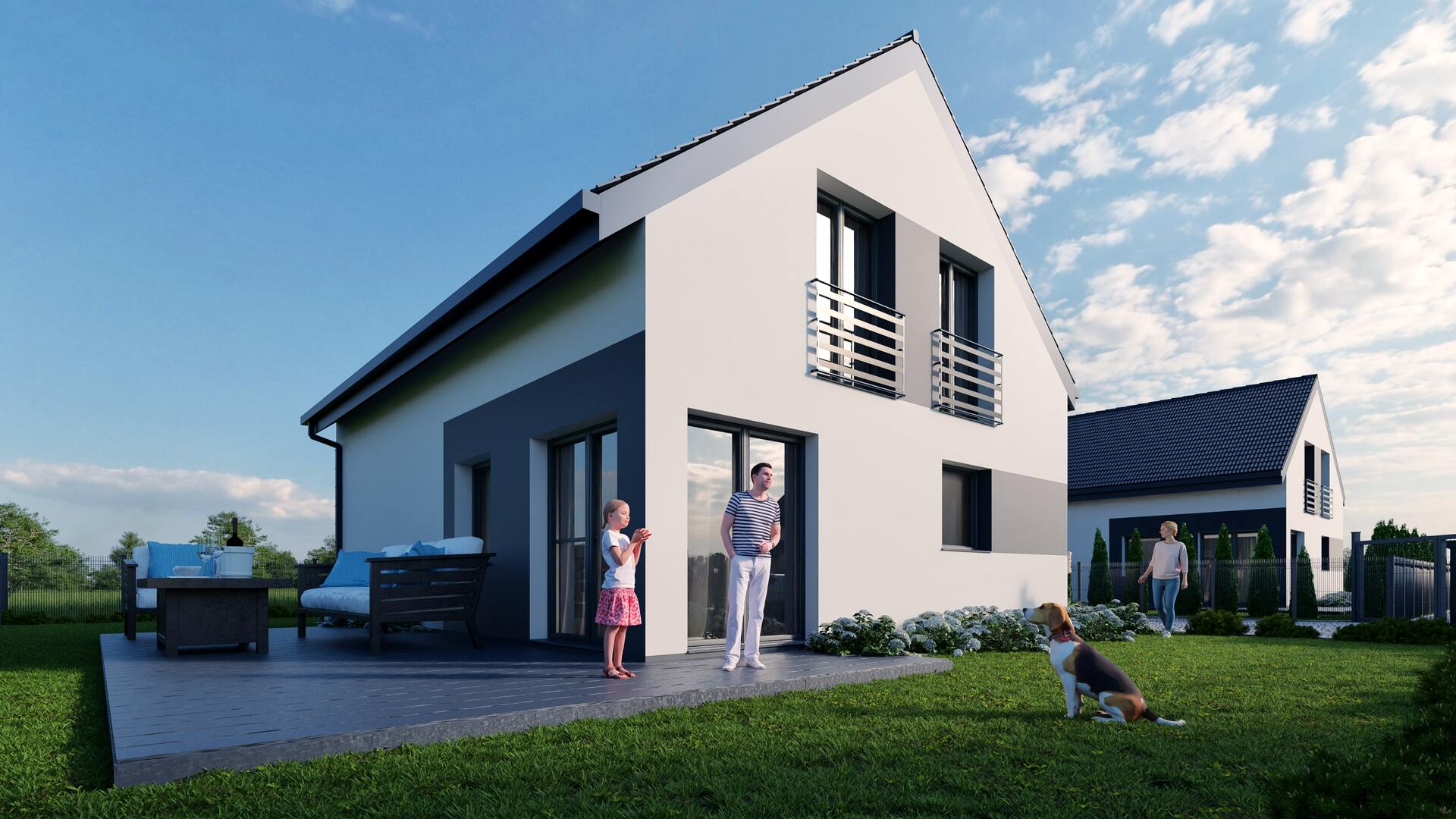
A render that looks like a real photo? Yes. Buyers shouldn’t feel like they’re looking at a computer graphic. The more realistic the details, the more effective the visualization.
2. Lighting and color scheme
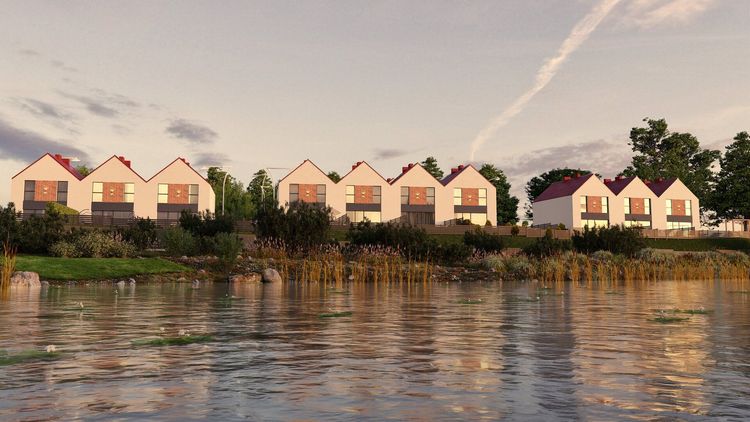
Good lighting = a pleasant perception. Visualizations should feel warm, inviting, and natural. They shouldn’t look like something out of a video game.
3. People and life
A development without people looks lifeless. Visuals featuring families, children, cyclists—these build emotional engagement.
4. Green spaces and surroundings
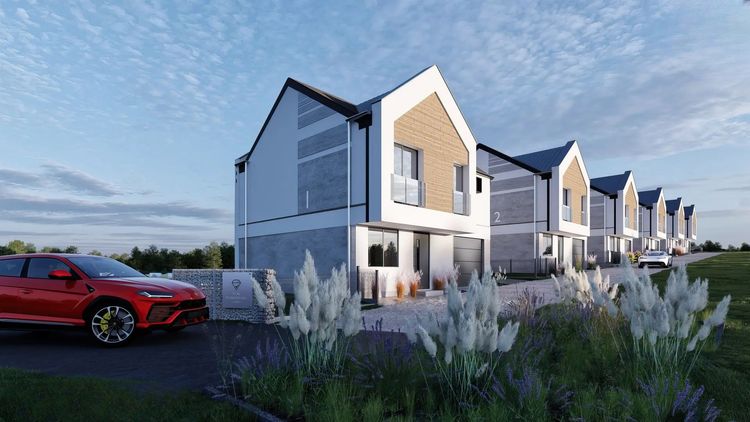
People buy not just an apartment, but the entire environment. Showing green areas, playgrounds, benches, and pathways makes the development feel more inviting.
5. Multiple perspectives
Street view → First impression
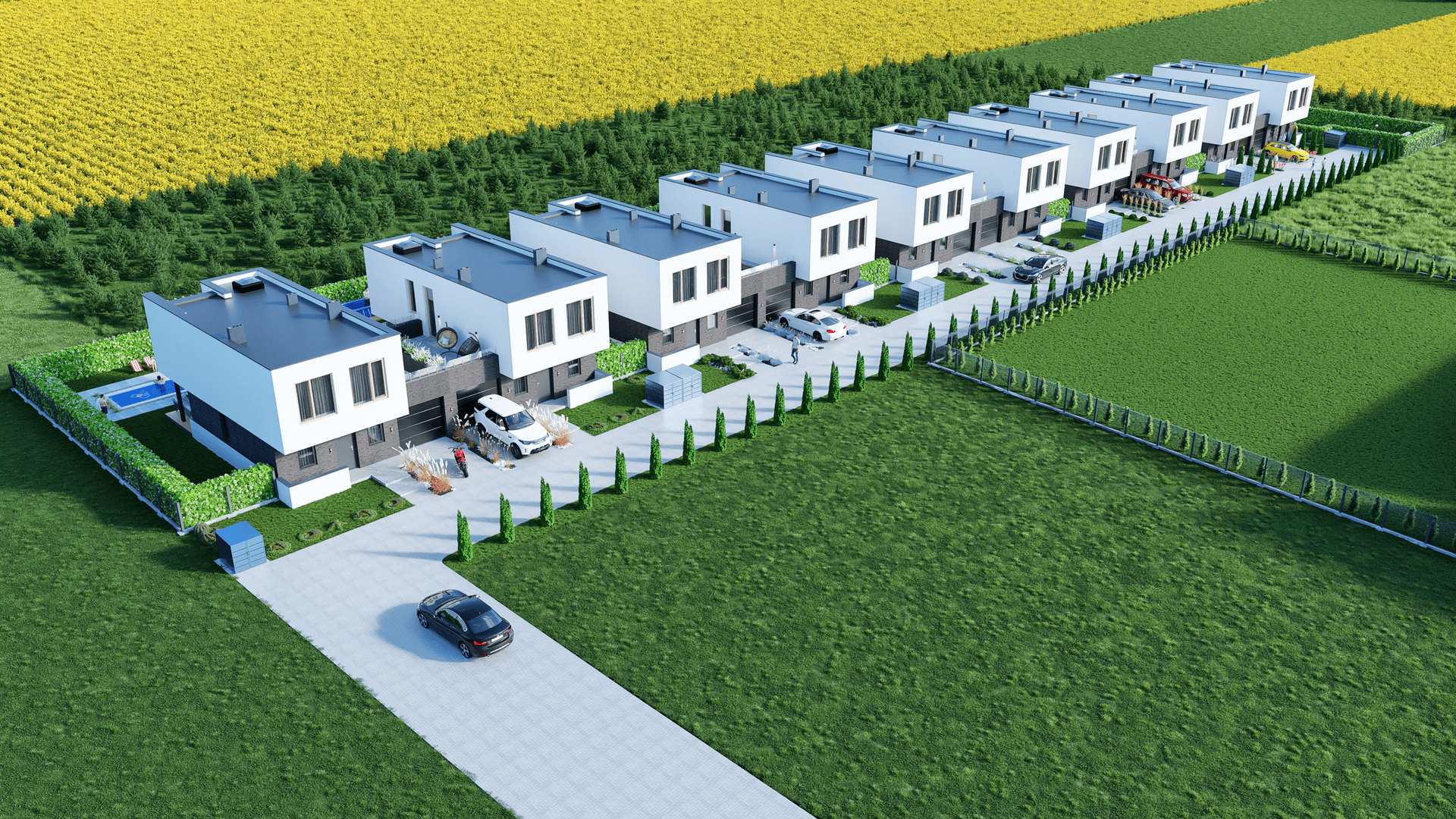
Bird’s-eye view → Overall scale of the development
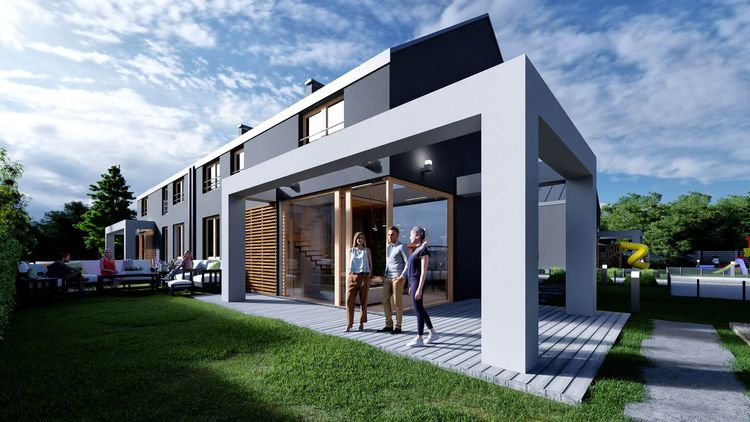
Interiors → Spacious feel
Is it worth investing in professional visualizations?
Yes, because the investment pays off.
High-quality visualizations:
Increase interest in the offer
Enhance the perceived value of the property investment
Shorten sales cycles
Allow for higher pricing
What happens if you cut costs on visualizations?
Your development won’t evoke emotions
Buyers won’t feel the urge to purchase
You’ll lose your competitive edge
Real estate developers who invest in high-quality visualizations sell faster and at higher prices.
That’s a fact.
Summary
Visualizations are not just an extra—they’re a key sales tool.
A great visualization builds emotions, creates an atmosphere, and convinces buyers before they ever visit the construction site.
Don’t cut costs on them. Because if your buyer doesn’t fall in love with your visualization…
…they’ll fall in love with a competitor’s.
FAQ – Housing Development Visualizations and Sales
1. Do housing development visualizations really help with sales?
Yes. Buyers purchase with their eyes. Without attractive visualizations, it’s harder to generate interest and stand out from the competition.
2. Does better visualization quality lead to higher property prices?
Yes. The better the presentation, the higher the perceived value of the property, allowing for higher pricing.
3. What types of visualizations work best?
Realistic, highly detailed, with natural lighting and life elements—people, greenery, cars. They need to evoke emotions.
4. How much do professional housing development visualizations cost?
Prices range from a few thousand to several thousand USD, depending on the project scale and quality.
5. Are visualizations better than real photos?
During pre-sales—yes. They present the property investment in its best light before construction is completed.
6. Where should housing development visualizations be used?
On the property website, social media, listings, billboards, brochures, and sales materials.
7. Should I invest in interior visualizations?
Yes. Interior visualizations help buyers imagine what their future home will look like, making their decision easier.
8. What mistakes do developers make with visualizations?
Unrealistic, artificial renders
Empty spaces with no people or greenery
Poor lighting and unnatural colors
Limited number of perspectives
9. Can 3D animations replace traditional visualizations?
Not always. Animations and virtual tours are great additions, but high-quality static visualizations remain essential for sales.
10. How quickly can professional visualizations be created?
Typically between a few days to a few weeks, depending on project complexity and the number of perspectives. Order them early to start selling sooner.
11. What formats are most commonly used in real estate sales?
The most popular include static 3D visualizations, animations, 360° panoramas, and virtual tours—each boosting buyer engagement.
12. Should visualizations include just the buildings or also the surroundings?
Definitely the surroundings! Greenery, pathways, playgrounds, and people make the development look much more welcoming.
13. What software is used to create housing development visualizations?
Popular choices include 3ds Max, V-Ray, Lumion, Blender, and Unreal Engine.
14. Can visualizations help sell properties before construction starts?
Yes! They allow buyers to "see" the development long before it’s completed, increasing pre-sales potential.
15. Can visualizations be updated during a sales campaign?
Yes, it’s a good idea to refresh them to match evolving customer expectations or new property investment details.
16. What lighting and color schemes work best for housing visualizations?
Natural light, warm tones, and realistic shadows make developments look more inviting and desirable.
17. Should visualizations showcase different times of day and seasons?
Yes! Daytime, evening, summer, and autumn visuals help buyers better envision life in the community.
18. What are the most common mistakes in low-cost visualizations?
Overly artificial colors and lighting
Lack of details (empty spaces, no people or greenery)
Disproportionate elements (e.g., oversized trees)
Poor textures and unrealistic designs
19. Can visualizations be used in online advertising?
Yes! They work exceptionally well in Facebook, Instagram, and Google Ads, capturing buyer attention.
20. Is it worth investing in 3D animations and virtual tours?
Yes, if your budget allows. Interactive presentations engage buyers even more and help them fully understand the project.
Sign up now for our free RendProletter and receive 1 email every week with a short summary of the best posts from our blog and emails with unique offers you won't find anywhere else!