


Real estate investing starts with one question.
Are you buying an asset, or a problem wrapped in nice photos?
I know what it looks like at the beginning.
Everywhere you turn, you hear that real estate is a safe haven.
At the same time, prices are rising, financing is expensive, contractors can delay the work, and the returns on paper often do not match what happens in real life.
That is why this guide is not about dreams.
It is about numbers, decisions, and moves that actually make sense.
What is real estate investing, really?
To me, real estate investing means buying, building, or improving assets that generate profit.
That profit can come from rental income.
It can come from appreciation.
It can also come from turnover, meaning buying, renovating, and selling at a profit.
It sounds simple, but only on a slide.
In the real world, the winner is the one who calculates risk better, makes decisions faster, and does not overpay because of emotion.
Why does real estate investing still work?
Real estate has one advantage that many other assets do not have.
It is tangible.
It can be improved.
Its use can be changed.
The standard, layout, sales model, or rental model can all be upgraded.
That means you are not just a passenger in the market.
You can influence the outcome.
This matters especially for developers and investors who want to build an operational advantage.
Because then you are not just betting on rising prices.
You are creating value yourself.
Where should you start with real estate investing?
The worst way to start is by looking for deals without a plan.
The best way to start is by answering three questions.
1. What is your goal?
Do you want monthly cash flow?
Do you want to build capital through resale?
Do you want to diversify a development business?
Do you want to protect your money from inflation?
Each of these goals leads to a different type of property.
That is why I define the goal first, and only then start looking for a project.
2. What is your time horizon?
Not every investment produces quick results.
A rental apartment is usually a steadier play.
A fix and flip is a faster turnaround, but it comes with more time pressure.
A land parcel or development site may require patience, because the value often rises only after zoning or permitting issues are resolved.
3. How much risk can you accept?
There is no investment without risk.
There are only investors who either understand it or ignore it.
I choose the first option.
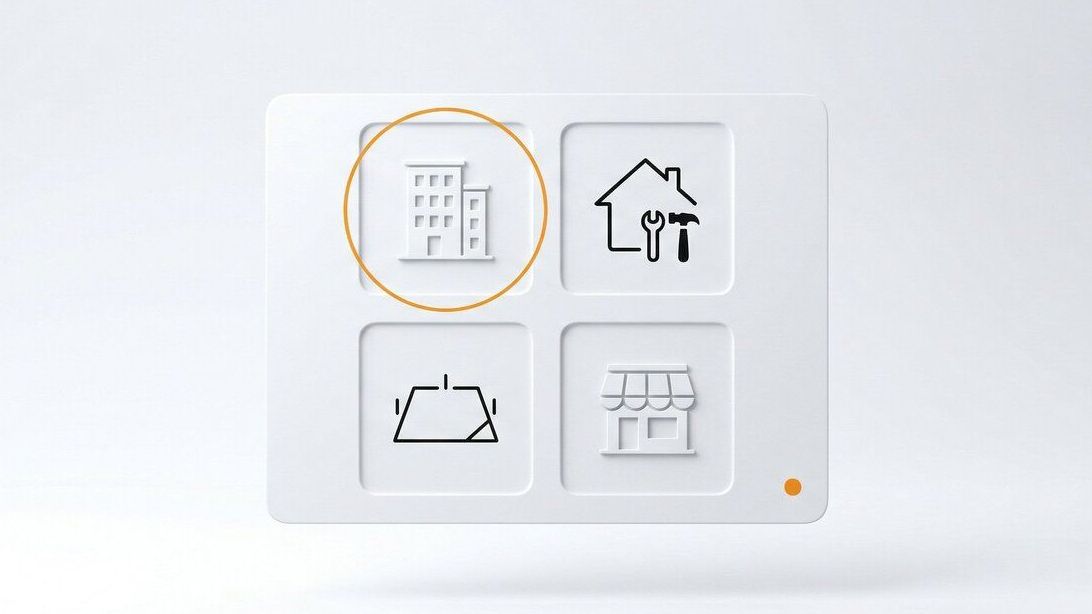
The most common real estate investment strategies
Rental properties
This is the model many people choose at the beginning because it is relatively easy to understand.
You buy a unit.
You prepare it for rent.
You earn money from rent and from potential appreciation.
This works best when the following factors are in place:
- Location
- Tenant demand
- A reasonable purchase price
- Low vacancy rates
- Control over management costs
Flipping, meaning buy, renovate, and sell
This model offers faster returns, but it requires discipline.
You do not make money here just by buying.
You make money by getting a great deal, running the renovation efficiently, and selling well.
This is where mistakes happen most often, because investors tend to:
- Underestimate renovation costs
- Ignore financing costs
- Overspend on finishes
- Buy based on personal taste instead of market demand
- Enter the deal without an exit plan
Land and development lots
This segment can produce strong results, but it requires knowledge of zoning, utilities, infrastructure, and development potential.
For a developer, this is often the most strategic area.
A good lot is not a cost.
A good lot is an advantage.
Here is what I look at first:
- Local zoning regulations
- Development conditions or entitlements
- Road access
- Utilities and connection costs
- Environmental and legal restrictions
- Site capacity
- Demand in the specific micro market
Commercial properties
This segment often offers higher returns, but it also comes with more volatility.
A commercial tenant may sign a longer lease.
At the same time, vacancy can hurt a lot more than it does in a residential unit.
This is a good option for people who understand the local market and can assess a tenant’s real potential.
How do you evaluate whether an investment makes sense?
This is where the real game begins.
Not in emotion.
In the spreadsheet.
The numbers I always calculate
Acquisition cost
This is not just the purchase price.
It also includes taxes, legal fees, commissions, renovation costs, furnishing, financing, and a buffer for surprises.
Cash flow
This is the monthly result after all costs are deducted.
I am not interested in fake profitability.
I care about the cash that is actually left over.
Rate of return
I check how much the investment truly earns relative to the capital involved.
ROI
I look at the return on my own equity.
Exit point
Before I buy, I already know how I will get out.
Sale.
Refinance.
Rental.
Change of use.
Without an exit strategy, it is not investing.
It is guessing.
Due diligence: the stage you cannot skip
A lot of people lose money not because they picked the wrong location.
They lose money because they believed the seller too quickly.
Before I buy, I check:
- The legal status of the property
- The title and land registry
- Liens and claims
- The technical condition
- Rental or usage history
- Construction documentation
- Local zoning or development conditions
- Operating costs
- The competition in the area
- Real demand, not a broker’s story
This is not overkill.
It is a filter that protects capital.
The most common mistakes beginner investors make
Let me say it clearly.
Most losses do not come from the market.
They come from ego.
Buying because everyone else is buying
That is not a strategy.
That is herd behavior.
The market rewards people who understand numbers.
Not people who are afraid of missing out.
Overly optimistic assumptions
Renovation costs that are too low.
A resale price that is too high.
A project timeline that is too short.
A tenant that is too perfect.
On paper, everything works.
In real life, it usually does not.
No financial cushion
In investing, the winner is not just the person who earns well.
It is the person who can survive delays, vacancies, and unexpected costs.
Ignoring the micro location
The city is not enough.
The neighborhood is not enough.
Sometimes even the street is not enough.
Sometimes success depends on which side of the street it is on, the building layout, or a five minute walk to public transit.
How do you finance real estate investing?
Your own capital gives you flexibility.
Debt gives you scale.
A partner gives you greater reach.
Each option makes sense if the math works.
The key is making sure the cost of money does not eat the margin.
That is why I analyze:
- The down payment
- Interest rates and fees
- Debt service capacity
- Cash reserves for periods with no income
- The downside scenario
A good investment does not stop being good once financing costs are added.
If it does, it was too weak from the start.
What should a developer look at more broadly than an individual investor?
A developer is not just buying square footage.
A developer is buying process, time, and repeatability.
That is why in development projects I focus heavily on:
- Site capacity
- Construction cost per square foot or square meter
- Potential sale price or rental rate
- The permitting and approval timeline
- Administrative risk
- Capital turnover
- A phased sales strategy
- Product market fit based on real demand
This matters because even a great parcel can be a weak investment if the process takes too long.
In real estate, time costs more than many people assume.
How do you build an edge in the real estate market?
I do not try to be everywhere.
I choose one advantage and strengthen it.
That advantage might be:
- Access to off market deals
- Better negotiations
- Faster project analysis
- More efficient renovation or construction
- Better sales and marketing
- Better rental management
- Better cost control
In the end, the winner is not the person who knows the most theory.
The winner is the one who has a system.
A simple model for evaluating an investment
When I receive a deal, I run it through a quick filter.
Filter number one: Does the location have demand?
I check who wants to live there, buy there, or rent there.
Families.
Students.
Professionals.
Companies.
Tourists.
Filter number two: Does the entry price create a margin of safety?
I do not buy the seller’s dream.
I buy potential on my side.
Filter number three: Can I improve the value?
A better standard.
A better layout.
A better use.
Better positioning in the market.
Filter number four: Do I know the exit plan?
If I do not, I do not enter the deal.
Property acquisition checklist
Make the decision only if the numbers still hold up.
FAQ: Real estate investing
Is real estate investing a good place to start?
Is real estate investing a good place to start?
Yes, but only if you start with a simple model and understand the numbers.
Your first investment does not have to be big.
It has to make sense.
How much capital do you need to start?
How much capital do you need to start?
That depends on the market, the model, and the financing.
The most important thing is not how much money you have.
The most important thing is whether you know how to calculate the full cost and leave a buffer.
Is it better to buy an apartment, a commercial unit, or land?
Is it better to buy an apartment, a commercial unit, or land?
That depends on the goal.
An apartment often offers a simpler starting point.
A commercial unit may offer better profitability.
Land gives the most flexibility, but it also requires more knowledge.
Does using financing make sense in real estate investing?
Does using financing make sense in real estate investing?
Yes, if it increases scale without destroying margin and liquidity.
No, if the project depends on assumptions that are too optimistic.
How do you avoid a bad investment?
How do you avoid a bad investment?
Do not trust emotion.
Do not trust the sales presentation.
Trust the analysis, the documents, and the risk scenarios.
Conclusion
If I had to leave you with one idea, it would be this.
A good investment does not start with a deal.
A good investment starts with an edge.
An edge in analysis.
An edge in process.
An edge in patience.
The real estate market still offers enormous opportunity.
At the same time, it does not forgive chaos.
That is why I do not just ask what to buy.
I ask why it will make money, how fast, and at what level of risk.
That is what effective real estate investing is really about.


