

Community branding should start earlier than most developers think.
Are you still choosing the name.
Are you wondering whether branding should come before the website, the renderings, or the ad campaign.
Are you worried that starting too early will slow the project down.
I get it, because a lot of developers treat branding like the final layer.
In reality, it is one of the first moves that makes everything else easier to sell.
How long does community branding take
A full brand identity for a new residential development usually takes 3 to 6 months.
That is a realistic timeline when you want more than a quick logo.
You need time to choose the right name, shape the brand strategy, build the visual identity, and prepare the brand for marketing and sales.
I look at it in three parts.
First, you name the project.
Second, you define the brand strategy.
Third, you build the logo, visual system, and messaging.
That matters because community branding is not just a design task.
It has to work on the property website, on site signage, digital ads, brochures, renderings, social media, and in every conversation your sales or leasing team has with prospects.
Start community branding with the name
The first big decision is the name.
What will this new community be called.
That sounds simple, but in practice it can take up to 6 to 8 weeks to do it right.
A strong name should feel clear, memorable, and aligned with the product.
It should fit the location, the price point, and the buyer or renter profile.
At the same time, you should check whether the domain is available and whether the name is practical to use in marketing.
In the US market, I would also think about how the name sounds in local advertising and whether it feels credible for the area.
A luxury condominium tower in Miami needs a different naming approach than a suburban build to rent community in Texas.
Here is what I would validate early.
Does the name match the location and the product type.
Is the domain simple and brand friendly.
Will the name look strong on signage, websites, and digital ads.
Is the name distinct enough to stand out in the market.
Internal link opportunity: Read more about how to name a real estate development.
Community branding needs strategy before logo
Once the name is set, the next step is strategy.
This is where you decide how the project should be positioned.
Do you want it to feel premium.
Do you want it to feel family focused.
Do you want it to feel design forward, lifestyle driven, urban, quiet, wellness centered, or commuter friendly.
Only after that should you move into the logo and visual identity.
I say this because a logo without strategy is just decoration.
A logo with strategy becomes a sales asset.
It gives your team a clear story to tell and helps buyers or renters understand what makes the community different.
For most projects, this phase can take around 6 to 8 weeks.
Internal link opportunity: Read more in the complete guide to real estate development branding.
When should you start community branding?
You should start earlier than the market usually does.
Most developers begin branding when the renderings, website, and marketing assets are already in production.
That is common, but it creates pressure fast.
Everything gets built at once, and the brand ends up reacting to deadlines instead of guiding the launch.
I would start community branding as soon as the project has enough clarity around product, location, and target audience.
That gives you time to build a name, secure the right web presence, shape the narrative, and prepare the first touchpoints before the sales push begins.
In the US market, that early work can support several launch paths.
For sale communities can use it to support early interest lists and pre sales momentum.
Multifamily projects can use it to support pre leasing and local awareness.
Mixed use developments can use it to create a stronger identity across residential, retail, and placemaking efforts.
Why starting community branding earlier gives you an advantage?
Starting early helps you sell earlier.
That is the real reason.
When the brand is ready before the full marketing rollout, you can begin collecting interest, shaping perception, and building trust before inventory is fully released.
Here is what that changes.
1. You can launch interest list marketing sooner
A simple landing page with a strong brand and clear message lets you capture leads early.
That gives your team a warmer audience by the time sales or leasing officially opens.
2. You create recognition before the full launch
People remember what they see repeatedly.
When the community name, visuals, and message show up early, prospects become familiar with the project before they are asked to act.
3. Your marketing becomes more consistent
Renderings, ads, brochures, site signage, and your website all move in the same direction.
That improves quality and reduces revisions, because the brand is already doing its job.
4. Your sales team has a better story to tell
A strong brand makes the value proposition easier to explain.
That matters in a crowded market, because buyers and renters compare quickly.
What to do once the community branding is ready?
Once the brand is built, do not wait for every single marketing asset to be perfect.
Start using the brand right away.
1. Launch a simple property landing page
This does not need to be the full website on day one.
A simple branded page is enough to introduce the development, share the location, highlight the concept, and collect leads.
The goal is not to close the deal immediately.
The goal is to start the relationship.
2. Use site signage to drive traffic
Construction fencing, teaser signs, and roadside signage can work extremely well when they push people to a clean and memorable URL.
This is especially useful in high traffic corridors and growing suburban submarkets where location visibility already exists.
3. Build an email list early
This is one of the most valuable assets in project marketing.
Not every prospect is ready to move the same week they discover the development.
Some need updates, pricing news, floor plans, or release timing.
That is why email nurture matters.
It keeps your project top of mind until the buyer or renter is ready.
4. Prepare renderings, floor plans, and virtual tours
Photorealistic renderings, 3D floor plans, and virtual tours help people picture the product before it is finished.
That reduces uncertainty.
It also makes your website and paid media perform better, because the experience feels more real and easier to understand.
5. Set up your social presence and Google Business Profile
A lot of prospects will search the project name and the developer name before reaching out.
That means your digital footprint needs to look credible.
In the US market, a clean social presence and a polished Google Business Profile can support trust, local visibility, and branded search behavior.
Internal link opportunity: Read more about Google Business Profile for real estate developers.
6. Start building the full property website
Your first landing page gets the ball rolling.
Your full website does the heavy lifting later.
That full site should support search visibility, paid traffic, floor plan browsing, lead capture, community storytelling, and sales or leasing conversion.
7. Create polished print collateral
Brochures, community overview sheets, floor plan handouts, and sales center materials still matter.
They help your team present the project clearly and professionally, especially when the prospect is closer to a decision.
8. Launch digital advertising
Once the brand, landing page, and messaging are aligned, paid campaigns become much more effective.
Google Ads, Meta campaigns, display, retargeting, and local awareness media all work better when the brand feels clear and consistent.
9. Strengthen the developer brand too
This gets missed all the time.
A prospect might discover the property brand first, then search the developer.
If your company presence feels weak, trust can drop fast.
That is why the corporate site matters.
It supports credibility and reassures people that the project is backed by a serious team.
How community branding helps sell faster?
This is not just about aesthetics.
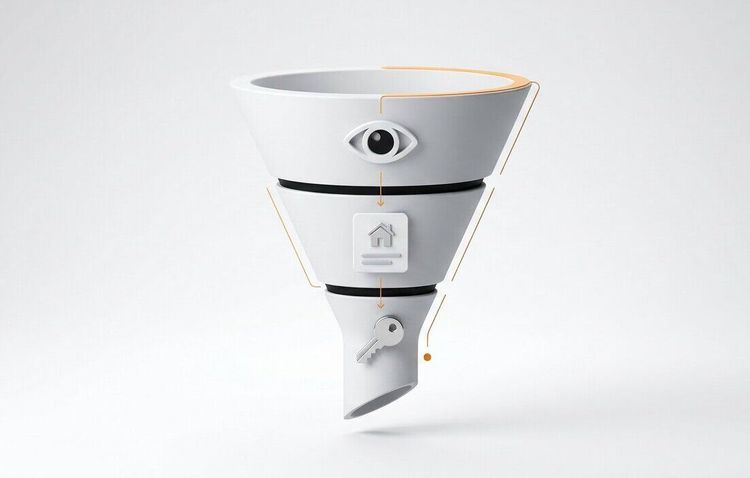
Community branding supports speed because it improves the path from attention to action.
Here is how I see it.
Community branding generates interest
Site signage, digital ads, landing pages, and early outreach create visibility.
More visibility means more people enter the funnel.
Community branding builds a lead database
Interest lists and email capture give you a real audience to market to over time.
That is valuable because launch timing, pricing, and availability rarely line up perfectly with first discovery.
Community branding improves presentation
A well branded development feels more polished and easier to trust.
That helps buyers and renters process the value faster.
Community branding makes campaigns more efficient
When the message, design, and destination page are aligned, your marketing usually performs better.
That can improve both lead quality and conversion rate.
Community branding builds credibility
A polished property brand supported by a credible developer brand reduces friction.
And when friction goes down, decisions happen faster.
The most common mistake developers make
The biggest mistake is treating branding like a visual add on.
It is not.
Community branding is a commercial tool.
It helps the market understand what the project is, who it is for, and why it matters.
When the brand is clear, marketing gets easier.
When the brand is rushed, every later step becomes harder.
I see this constantly.
Teams spend heavily on renderings, paid media, and websites, but the underlying brand is still vague.
That weakens the whole launch.
FAQ about community branding
How early should I start community branding
I would start as soon as the project has enough clarity around location, product type, and target audience.
That gives you time to name it properly, shape the strategy, and build launch assets before sales or leasing begins.
How long does brand identity development take
Should I create the name before the logo
Do I need a website before the project officially launches
Does community branding really affect sales or leasing performance
Final takeaway
If you are asking when to start branding a new residential development, my answer is simple.
Start earlier than feels comfortable.
Do not wait until the renderings are almost done and the ad campaign is ready to launch.
Start when you still have time to build the name, the strategy, the message, and the first audience.
That is how you create momentum before the market sees the full product.
And that is how good developers shorten the path from launch to absorption.
Community branding works best when it starts early.